Vertical Farm Basics and Overview
What Scale Really Means for a Vertical Farm: Cost Structure and Profitability
A vertical farm is a business weighed down by fixed costs. Because you commit to equipment, HVAC, lighting, and staffing up front, starting small does not automatically mean less risk.
What matters for profitability is not total cost, but “how much fixed cost each plant has to carry.” Scaling up is a strong option here, but it also demands more working capital and makes running the site harder.
In this article, I break down the high-cost structure of a vertical farm, explain why scale works, and sort out the issues that scaling alone does not solve.
If you want to check the basic mechanics of a vertical farm first, the article below is also useful.
A Complete Guide to How Vertical Farms Work — Read This One and You’re Set
Why is a vertical farm so expensive?
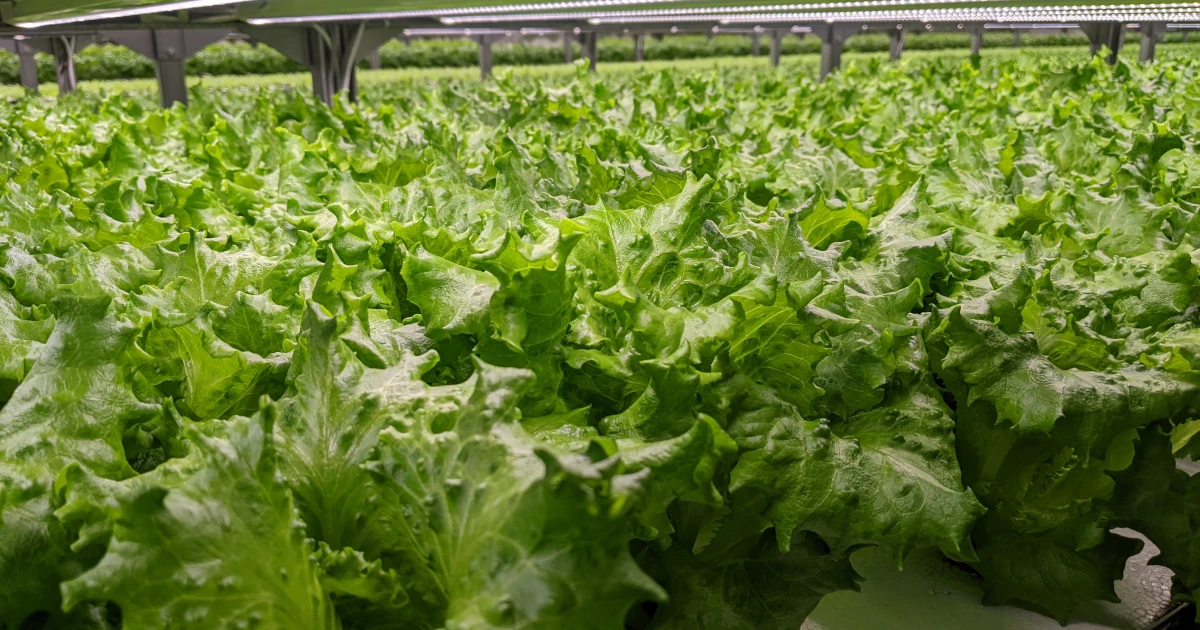
The first thing to understand about the vertical farming business is its “cost structure.”
In general, a vertical farm requires both high initial investment and high operating cost, compared with open-field farming or protected cultivation.
Why?
The reason becomes clear once you unpack the cost structure of a vertical farm.
1. Running costs are high
Compared with open-field farming, a vertical farm runs up much higher utility bills.
Especially in a plant factory with artificial lighting (PFAL), the electricity cost for lighting is a very heavy burden. Roughly 30% of total running cost goes to utilities.
Because there is so much equipment, maintenance is also an ongoing expense.
Cultivation and manual labor are made more efficient, but the equipment that makes that efficiency possible naturally costs money.
As a result, depreciation — the cost of that equipment — also takes up a sizable share.
Which means the initial cost is high as well.
2. Initial cost is high too
As a rule,
open field (outdoor) < protected cultivation (e.g., greenhouses) < vertical farm — the more artificial the environment, the more stable the growing conditions for the crop.
You gain more control over the growing environment, but the equipment that provides that control costs money.
Equipment cost is highest in a PFAL-style vertical farm.
On top of the construction cost of the facility itself, you have LEDs, HVAC, hydroponics equipment, and more.
The more of the latest equipment you bring in, the higher the cost climbs.
One strong way to hold costs down — “scaling up”
So a vertical farm has this high-cost structure.
And yet, one of the ways to hold costs down is “scaling up.”
Of course, as scale grows, total initial investment and operating cost go up too — but so does production volume.
Which means cost per unit of output goes down.
The bigger you make the farm, the more efficiency improves across the board, and the easier it becomes to turn a profit.
For a vertical farm, economies of scale matter in particular.
As you can see from the cost structure we just broke down, the share of fixed cost is high. And the higher the share of fixed cost, the more strongly economies of scale come into play.
Small vertical farms have a harder time getting into the black
Just how much benefit do economies of scale deliver as size grows?
The actual data makes this very clear.
In PFAL-style vertical farms, the more cultivation area you can use, the easier it is to produce profit.
A large vertical farm can bring in automation equipment and increase output per unit of area.
You can increase output per unit of area because, as the whole facility gets bigger, the work space does not grow at the same rate as the cultivation space.
So the larger the facility, the higher the share of floor space you can devote to cultivation, and the higher the output per unit of area.
Conversely, when scale is small, the cost of producing a single plant goes up, which makes profitability harder to achieve.
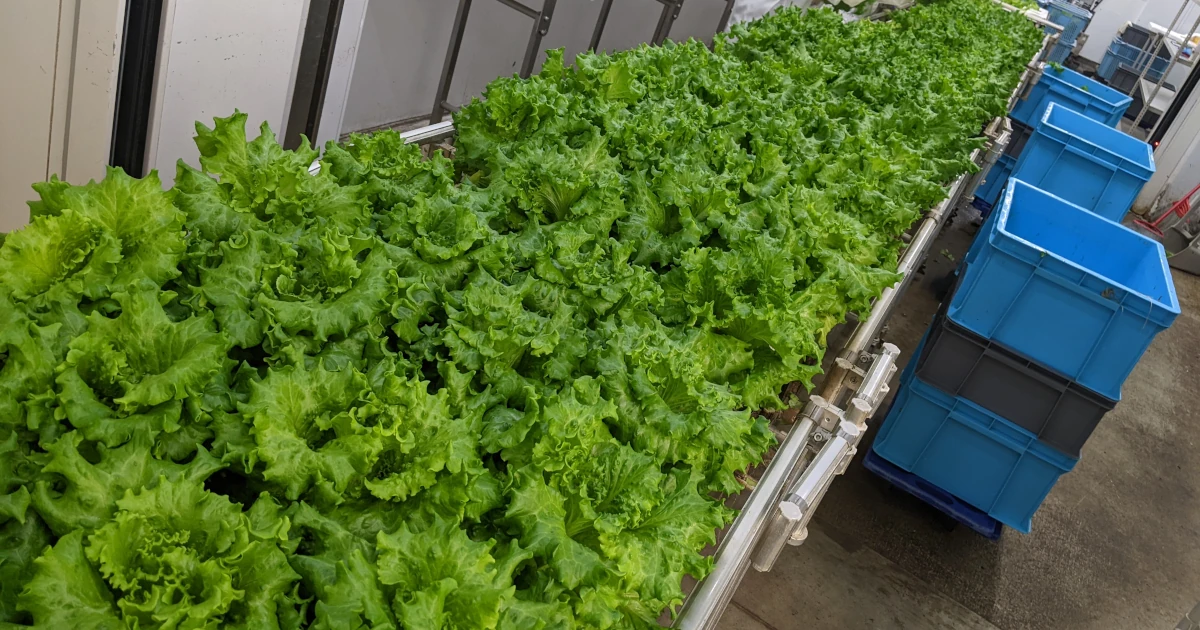
The point that a small operation drives up the cost per plant is critically important for keeping a vertical farm out of the red.
I’ve written about a related topic in another article.
What insiders will never say — the real challenge of a vertical farm is “people don’t stay”
What scaling up alone will not solve
Scale up a vertical farm and cost efficiency improves, making it easier to turn a profit.
So far, so good.
However, it is not the case that anyone who scales up can easily turn a profit in the vertical farming business.
If scaling up were a universal solution for the vertical farming business, many operators would jump into large-scale investment. Reality is not that forgiving.
The real reason big corporations start a vertical farm and then pull out soon after
Don’t fall into the trap of running a large facility
I’ve said that bigger is better — so where’s the catch? Let me explain the pitfalls of a large-scale facility.
At a larger facility, running costs rise in line with scale.
Utilities in particular demand caution.
The facility has to keep consuming large amounts of electricity 24 hours a day, 365 days a year.
Labor cost also rises sharply with scale.
The bigger the facility, the more people you need.
Which means the bigger the facility, the more working capital risks ballooning without limit.
If operations go wrong, you can keep posting massive losses for a long stretch.
Here is the single most important point I want to stress:
At a large facility, the need to reduce running cost is high, so the skill and know-how of the staff driving continuous improvement on the production floor matter even more.
A large facility backed by capable on-site staff is commercially strong.
The true value of scaling up only emerges when it is combined with that kind of frontline capability.
Know-how for building an efficient site is covered in detail in the content below.
172 Tips for Raising the Profitability of a Vertical Farm
Summary: the substance and the limits of scaling up
As explained above, if you want to turn a profit in a vertical farm, scaling up is an effective approach.
By pursuing economies of scale, you hold down the fixed-cost burden per plant, and higher production volume makes profit easier to generate. There is no doubt about that.
However, scaling up is only “the entrance.” The vertical farming business is not so forgiving that simply making the facility bigger will make it work.
What you need is strategy and execution to “make use of” that scale.
Pour wasteful spending into construction, and you will suffer enormous depreciation for a long time. Likewise, fail at reducing running cost, and it will keep squeezing your profit.
Improve cost efficiency through scale, while raising frontline capability to support operations. Making those two work together is the core of what determines profitability in the vertical farming business.