Farm Operations Management
Tipburn in Vertical Farms: The Root Causes Beyond Calcium Deficiency
Articles for Farm Operations Managers
Lettuce with browning, dried-out leaf tips — most growers will tell you it’s calcium deficiency.
They’re not wrong. But simply raising the calcium concentration in your nutrient solution based on that answer alone won’t do much to reduce tipburn.
The real problem is the reason calcium deficiency happens in the first place. Here I’ll lay out the underlying structure of why this problem persists in vertical farms, and how to address it without sacrificing productivity.
What Is Tipburn
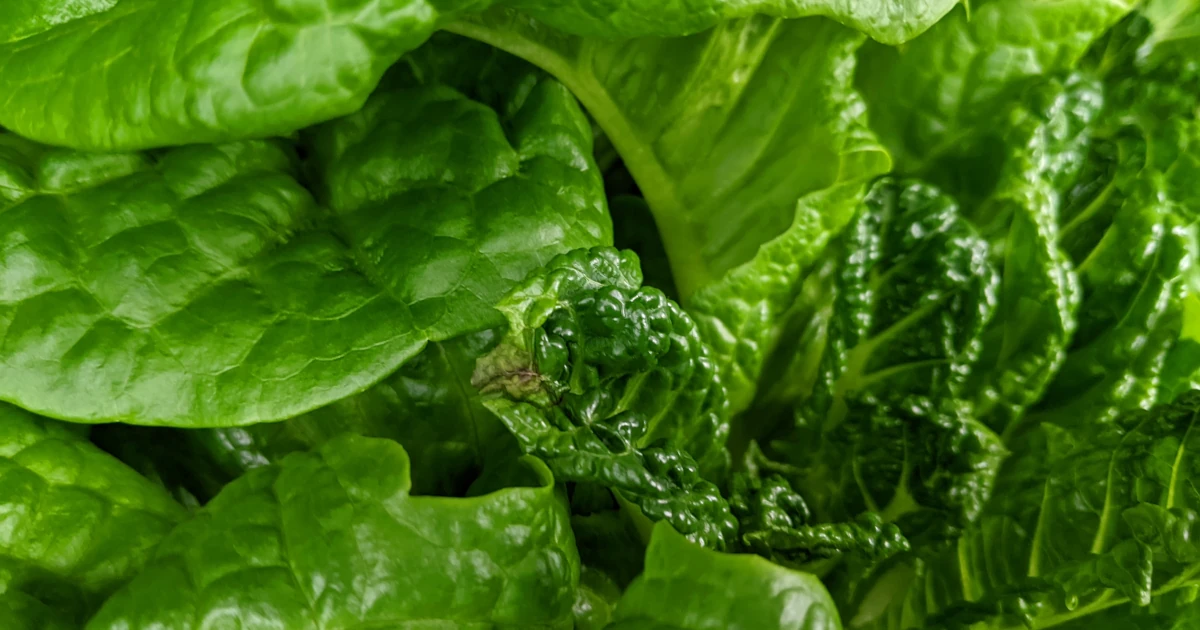
Tipburn is a physiological disorder where the tips of leaves discolor and appear to die back. The direct cause is calcium deficiency in the leaf tissue, and it is widely seen in lettuce, strawberries, herbs, and leafy greens grown in vertical farms.
That said, the reasons calcium deficiency occurs in leaves are varied. Simply raising the calcium concentration in the nutrient solution because calcium is “deficient” rarely resolves tipburn. To address it properly, you first need to understand the mechanism behind how it develops.
Why Tipburn Happens — and Why Vertical Farms Are Especially Prone
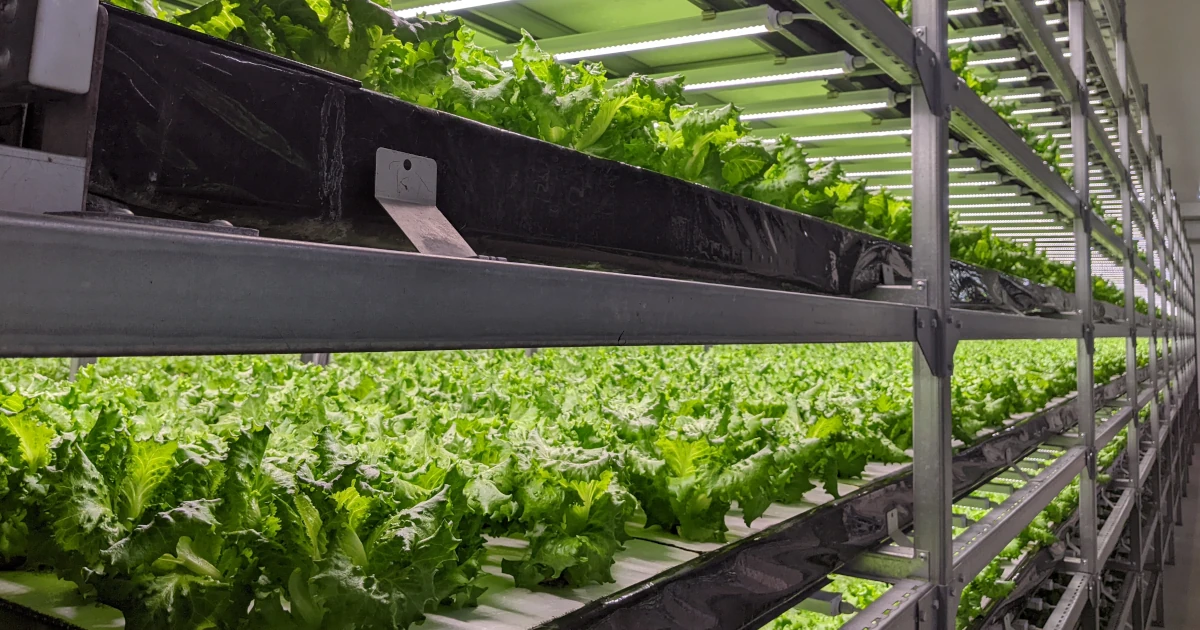
The direct cause of tipburn is calcium deficiency in specific parts of the plant. Vertical farms are particularly susceptible, and the reasons lie in the growing environment unique to vertical farms and in how water and calcium move within the plant.
The Mechanism Behind Tipburn
Plant cells are surrounded by a sturdy cell wall that maintains cell shape and protects the cell from external stress. Calcium strengthens pectin, a structural component of the cell wall. When calcium is deficient, the cell wall weakens and can no longer withstand the internal cell pressure (turgor pressure). The result is cell wall breakdown — and tipburn.
The parts of the plant that need the most calcium are young leaves and leaf tips. Because cell division is most active there and cell walls are being formed in rapid succession, calcium deficiency hits hardest in those areas. This is why heavy tipburn concentrates in the inner leaves of lettuce.
The Connection to Accelerated Growth
Tipburn occurs outside vertical farms too, but vertical farms create conditions that make it especially likely. “Accelerated growth” — using controlled light, temperature, humidity, and CO2 to push plant growth rates — is one of the main factors that elevates tipburn risk.
Promoting photosynthesis raises growth rate, but it also increases the demand for nutrients. As growth rate rises, certain nutrients can’t be supplied to the leaves fast enough — and calcium tops that list. On top of that, vertical cultivation and high planting density (to maximize production efficiency) further increase tipburn risk.
Why Calcium Deficiency Happens in Leaves
Tipburn is difficult to manage because calcium deficiency in leaves has multiple causes. High ammonium nitrogen concentration in the nutrient solution acidifies the plant’s internal environment and inhibits calcium uptake. Potassium and magnesium share the same uptake pathway as calcium, so when their concentrations are high, they competitively block calcium absorption. If root development is insufficient or root metabolic activity is low, uptake efficiency falls. And when humidity is high, transpiration is suppressed — reducing the supply of calcium to the leaves, since calcium moves through the transpiration stream.
Beyond these, there are many other contributing factors: structural dead spots in air circulation due to rack geometry, the length of the growing period, harvest timing, and more.
The bottom line: when growth rate is too fast, the plant can’t supply calcium to the leaf tips fast enough even if absorption is adequate. The right starting point is not the calcium concentration in the nutrient solution, but the question: why isn’t calcium reaching the leaves?
Addressing Tipburn at the Root — Three Approaches
One important premise before thinking about tipburn countermeasures: tipburn has predictable timing and location. It concentrates in newly expanded leaves — especially the inner leaves surrounded by outer leaves — during the rapid growth phase just before harvest. Countermeasures are most effective when focused on this timing and location.
Environmental Control
If humidity is excessively high, use a dehumidifier to maintain appropriate levels. For leafy greens, a relative humidity of 60–70% is generally the target. For temperature, maintain the optimal growing range — around 20–25°C for lettuce. Gentle airflow around the leaves reduces humidity near the leaf surface and promotes transpiration, which helps move calcium through the plant. Air that is too strong stresses plants, so intensity adjustment is necessary.
Nutrient Management
Calcium is most readily absorbed in the pH 5.5–6.5 range, so pH management of the nutrient solution is foundational. Choosing nitrate nitrogen as the nitrogen source shifts the plant’s internal pH toward alkaline, promoting calcium uptake. If the nutrient solution relies heavily on ammonium nitrogen, that’s worth revisiting.
Optimizing the Growing Process
Excessively high planting density traps moisture around plant bases and impedes transpiration. Maintaining appropriate planting density ensures air circulation and promotes transpiration. Variety selection is also effective from the standpoint of tipburn tolerance.
Balancing Tipburn Control with Productivity
Most common tipburn countermeasures work by slowing growth rate. That creates an inherent trade-off: the more thoroughly you apply countermeasures, the more productivity tends to drop. This is the core difficulty of tipburn management.
Suppressing tipburn while maintaining peak yield — that’s where the skill of the crop management team is tested. It demands a deep understanding of plant physiology and environmental control, and the ability to combine growing conditions and management parameters appropriately.
Techniques for Reducing Tipburn Without Sacrificing Productivity
In practice, there are several approaches for improving both tipburn control and productivity at the same time. The main ones:
-
Pre-harvest environment switch: For the 3–5 days before harvest only, reduce light intensity and switch to environmental conditions that promote transpiration. The main growing period is unaffected — the countermeasure only applies during the high-risk window.
-
Localized airflow improvement: When airflow reaching the inner leaves is weak, simply adjusting the direction or angle of circulation fans can dramatically reduce the number of plants affected. Knowing the structural dead spots in your growing rack configuration is critical.
-
Stepped planting density adjustment: Even when transplanted at high density, thinning and redistributing plants as they grow ensures airflow. It takes labor, but it makes high-density growing compatible with adequate air circulation.
-
Staggered final planting timing: When plants at the same growth stage are concentrated together, the rapid pre-harvest growth phase overlaps and tipburn spikes. Staggering seeding and final planting timing distributes the risk.
-
Variety rotation: Combine tipburn-tolerant varieties with high-yield varieties, and switch between them based on season and climate conditions.
All of these involve navigating the same trade-offs — “lower light means lower yield,” “lower density means lower area efficiency.” But when you understand the situation on the floor accurately and combine countermeasures strategically, there is often room to significantly reduce tipburn without a large productivity hit. There are real cases where reviewing airflow alone cut the number of tipburn-affected plants in half. That kind of floor-level knowledge connects directly to profitability.
172 Tips for Improving Vertical Farm Profitability
Tipburn’s Impact and Field Judgment
One final point, from someone who has spent years managing lettuce cultivation in vertical farms.
When tipburn appears, the effect on actual flavor is limited. But the visual quality is clearly degraded — and given the reality that “vegetables are chosen by how they look,” the impact on shipment quality can’t be ignored. In many cases, you have no choice but to decide whether to hold back lightly affected plants from shipment, or to remove the affected portions before shipping.
On the other hand, there are operations that work frantically to remove every trace of tipburn. But tearing off leaves indiscriminately creates wounds that can lead to rot — and when you look at the full picture, the removal work often does more harm than good. The practical approach is not to obsess over tipburn, but to judge whether it rises to the level that affects shipment quality, and act accordingly.