Farm Operations Management
Transplanting and Final Planting in Vertical Farms: Practical Tips That Make or Break Profitability
Articles for Farm Operations Managers
In a vertical farm, the timing of when you move seedlings directly affects subsequent yield and operational efficiency. Transplanting and final planting may look like unglamorous steps, but they have downstream effects on space utilization, labor costs, and the incidence of unmarketable produce.
What matters most is adjusting plant density as seedlings develop. Move them too early and space goes to waste; too late and overlapping leaves disrupt growth. Neither is acceptable in a high-cost facility.
This article clarifies the difference between transplanting and final planting, how to judge the right timing, and the practical tips that keep this work running consistently.
Understanding the Difference Between Transplanting and Final Planting
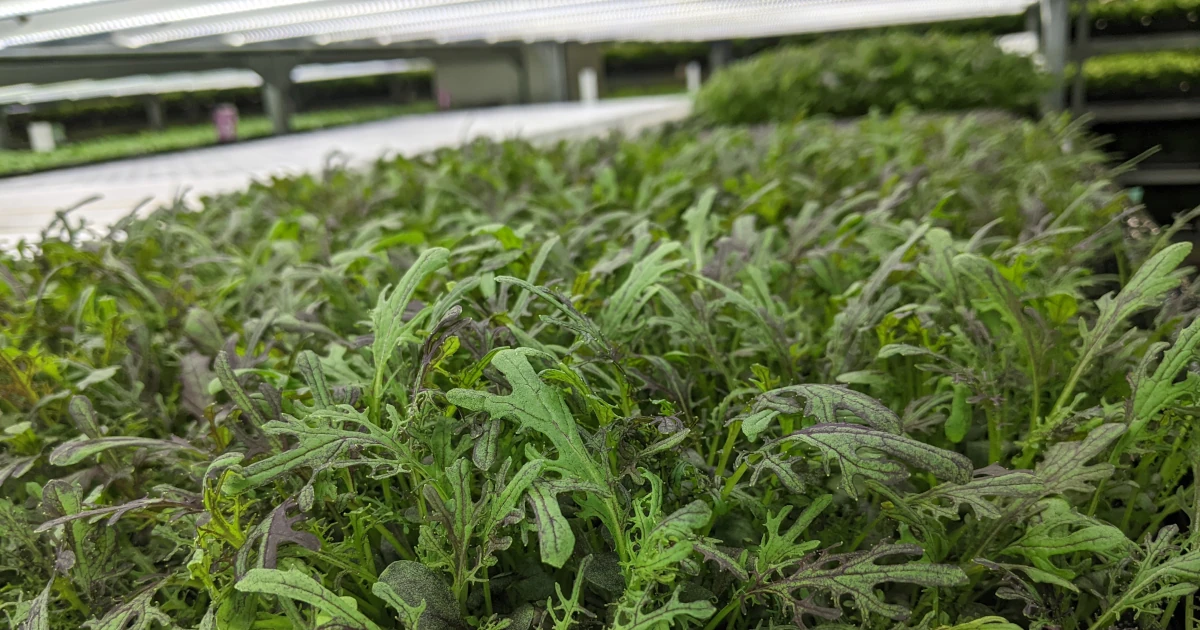
To optimize the cultivation process in a vertical farm, you need a precise understanding of the difference between “transplanting” and “final planting.” They look similar, but their purposes and timing are clearly different.
Transplanting is the process of moving small seedlings — germinated from seed — into a larger space. The goal is to promote root development and early growth: this is where seedlings establish strong roots and early vigor. Final planting comes after, placing sufficiently developed seedlings into the full-scale growing system where they’ll be managed through to harvest. The density and position of placement directly affects the quality and volume of the final harvest.
The plant growth cycle moves through: germination → propagation → transplanting → growth → final planting → harvest. Transplanting is an early-stage process; final planting is mid- to late-stage.
Why Transplanting and Final Planting Affect Profitability
A vertical farm is a business with high upfront investment and operating costs. Efficiency is required at every step, but transplanting and final planting have an outsized impact on the bottom line.
First is the effect on growth. Minimizing stress during transplanting and optimizing the environment after final planting leads to shorter growing periods, reduced disease risk, and increased harvest volume.
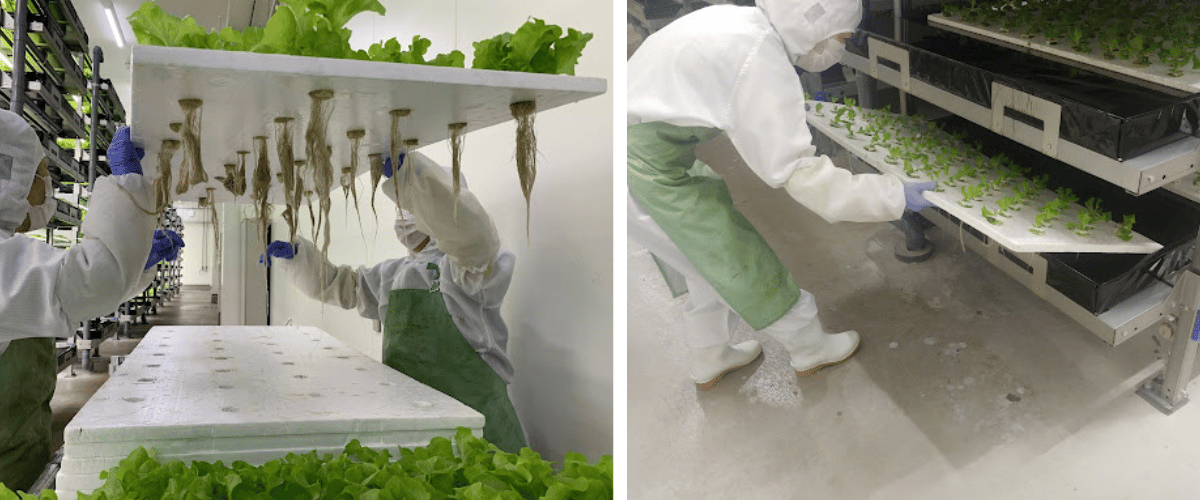
Second is the space efficiency problem. Seedlings can be managed at high density during the propagation stage, but as they grow, each plant requires more area. Getting transplanting and final planting timing right is what lets you extract maximum production from limited growing space. Get it wrong and you’re either wasting empty space or causing growth disruption from overcrowding.
Third is the labor cost problem. Labor accounts for roughly 30 to 40% of operating costs in Japan’s vertical farms. Streamlining and standardizing transplanting and final planting work to reduce time and human error has a direct effect on both cost reduction and quality improvement.
The Techniques: Key Success Points for Maximizing Yield
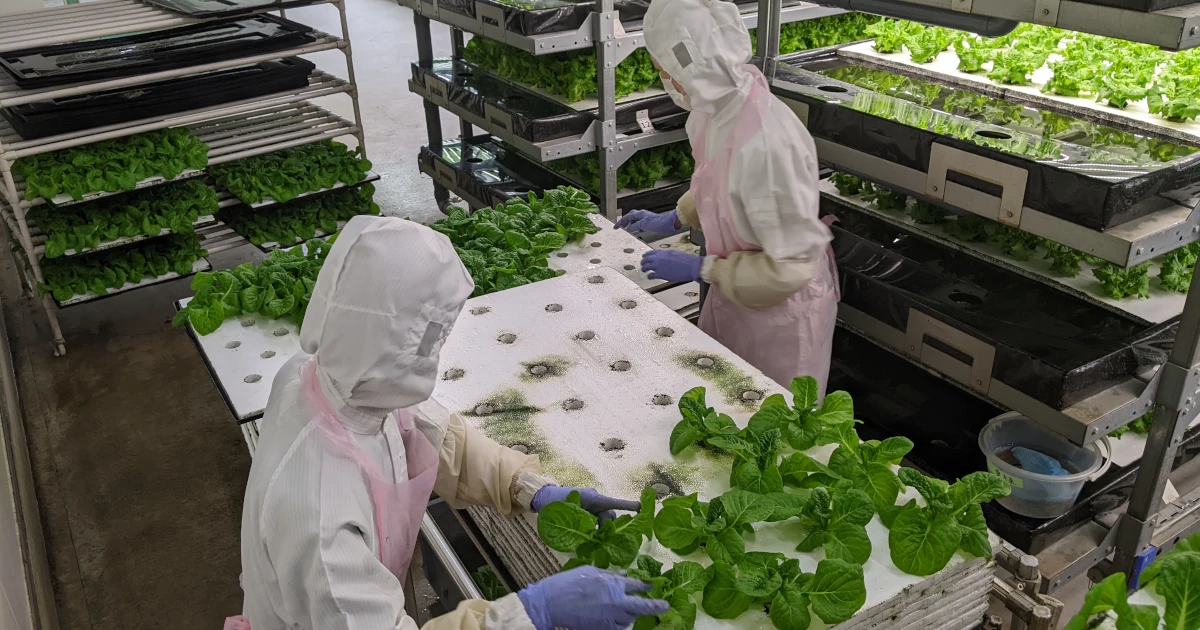
For both transplanting and final planting, there are critical points that determine seedling development and final yield. Here are specific, practical tips from the field.
How to Judge the Right Timing: What Leaf Overlap Is Telling You
When judging the timing for transplanting or final planting, what I always look at is “the degree of leaf overlap.” I look at the seedlings from above and check whether leaves are starting to touch adjacent seedlings, or whether the lower leaves are being shaded by neighboring plants. If I check first thing in the morning and it feels more crowded than yesterday, that’s the transplanting signal.
Growth speed changes with the environment, so frequent observation is essential. Once you miss the window, overcrowding progresses and cannot be reversed — I recommend a five-minute check at the same spot each morning.
Efficient Work Practices
Before you start work, lay out all materials and tools within arm’s reach around the work surface. This cuts down on unnecessary movement.
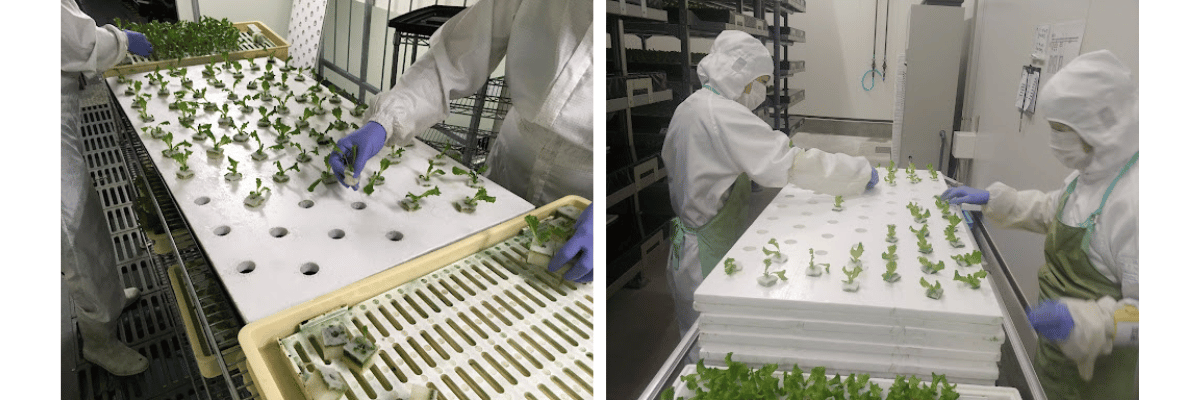
Handle seedlings carefully to avoid tearing leaves or roots. If transplant damage occurs, growth after final planting is disrupted and it directly compromises harvest quality.
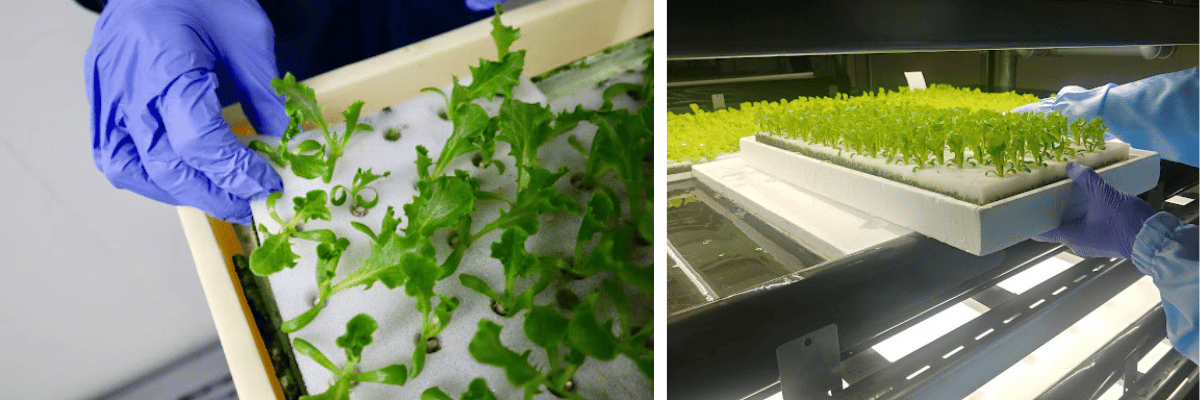
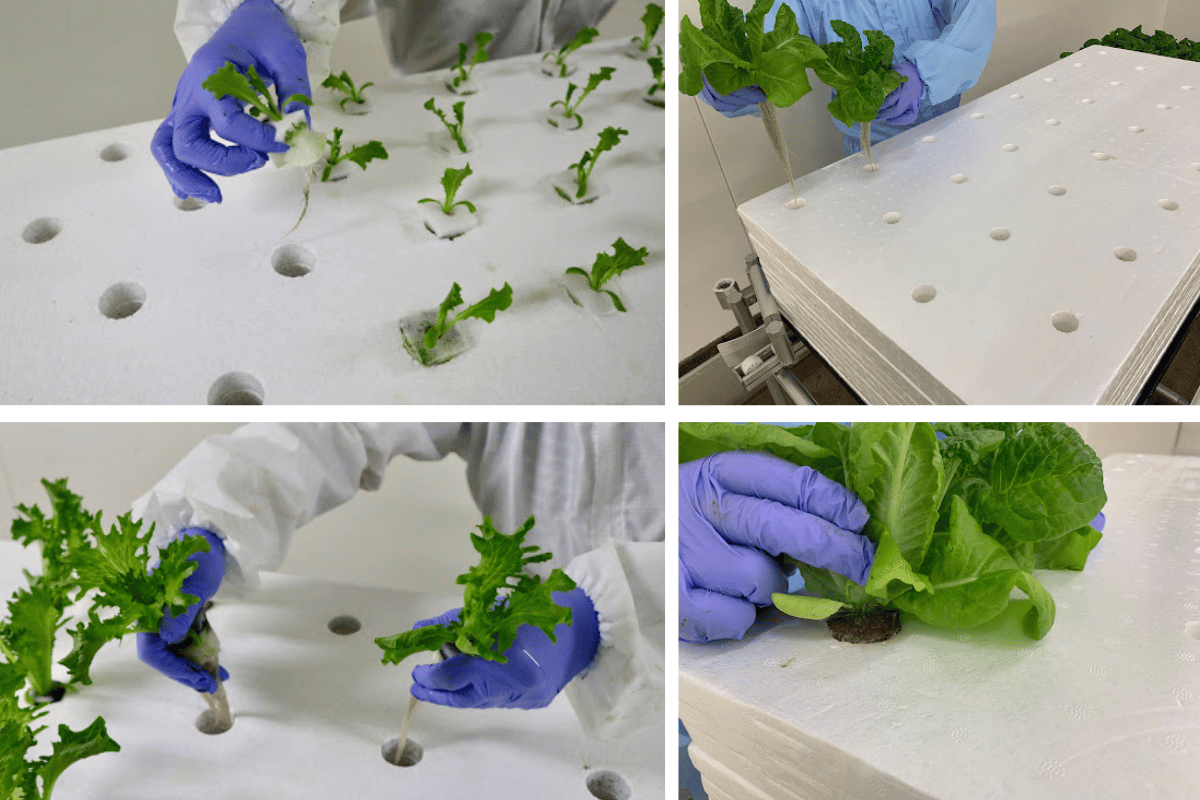
On plant spacing: when you actually check, more facilities plant too densely than you’d expect. The easiest way to get an intuitive feel for the right spacing is to physically lay out plants at their expected size at harvest and see how they fit.
Seedling Selection: The Strategy That Directly Affects Profitability
Selecting seedlings at the time of transplanting or final planting is a decision that feeds directly into profitability. Skip selection and you end up with uneven size and quality in your harvest, with more unmarketable produce that doesn’t meet market shipment standards.
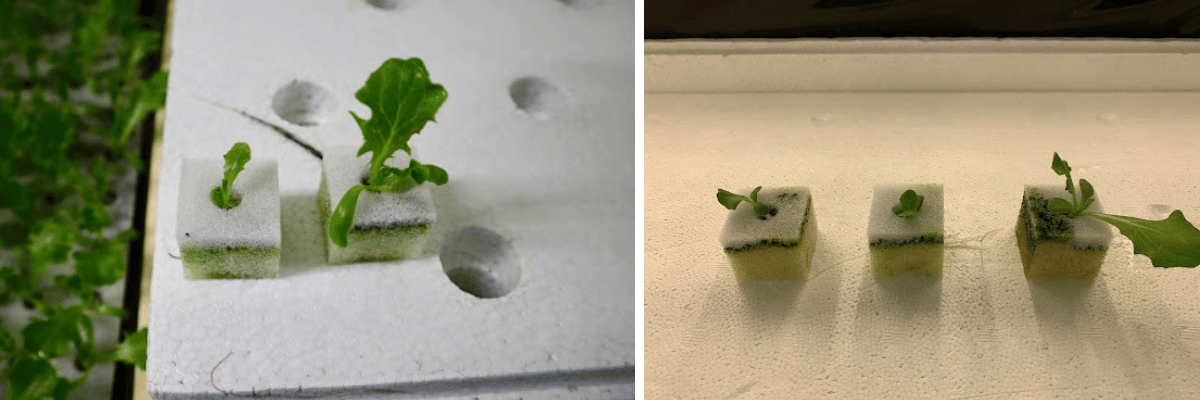
The benefits of selection compound. Filling growing space exclusively with uniform seedlings raises the efficiency of nutrient solution and electricity inputs, and lowers disease risk. It also contributes to standardizing harvest and shipment work, improving overall process throughput.
Evaluate seedlings on four criteria: germination uniformity, root development, stem uprightness, and leaf color and shape.
Summary
Transplanting and final planting are two critical junctures that determine a vertical farm’s profitability. Getting the timing wrong at either step degrades space efficiency and expands quality variation. Checking leaf overlap every morning so you don’t miss the window, and rigorous seedling selection at each operation — these two things lead to improvements you can see on the floor immediately.
Even with good equipment, if precision at these basic steps is low, you won’t recover your costs. Flip that around: just raising the quality of transplanting and final planting, with no additional investment, will reliably improve yield and the proportion of market-grade produce.