Crops
Can You Grow Rice in a Vertical Farm? What It Takes to Make the Business Work
Growing rice in a vertical farm is technically possible. Control the environment with hydroponics and rice will grow as a plant.
But as a business, the picture changes. Rice has a long growing cycle, a low selling price, and a large proportion of non-edible parts. For vertical farms — where equipment costs and electricity costs are a given — those factors hit hard.
This article examines why hydroponic rice is technically “possible” but commercially difficult, and where future potential remains.
Which Crops Are a Good Fit for Vertical Farms?
Building a vertical farm requires significant capital investment, so the top priority for keeping the business viable is recovering that investment as quickly as possible. That’s why crops with fast growth cycles and high turnover rates tend to be chosen.
When using artificial lighting, the running cost of LED lighting is a major burden. On top of that, when a large portion of the harvested crop ends up as waste, the light energy put in — and the electricity bill behind it — goes nowhere. That’s why vertical farms favor crops where the edible portion makes up a high share of the plant.
Given these requirements, leafy greens like lettuce and herbs have become the main crops grown in vertical farms.
Is Rice a Good Fit for Vertical Farms?
Rice has a long growing cycle and a relatively low selling price compared to other crops suited for vertical farms. While lettuce can be harvested in about a month, rice is typically harvested twice a year in Japan’s temperate climate — in tropical regions, three or more harvests per year are possible.
Beyond what can be sold as brown rice or white rice, the rice husks, leaves, and stems offer little direct revenue for the grower and largely go to waste. For vertical farms with high running costs, a high proportion of waste means the money put in is directly wasted.
On top of that, in Japan and across Asia, rice is a staple food and keeping prices low is seen as socially important. Positioning rice as a premium product is not easy either. The combination of a long growing cycle, high waste ratio, and price pressure makes recovering the investment in expensive equipment extremely difficult.
The difficulty of securing profitability is similar to what I wrote earlier about the relationship between vertical farms and grains. See the article below as well.
Current Challenges and Future Possibilities
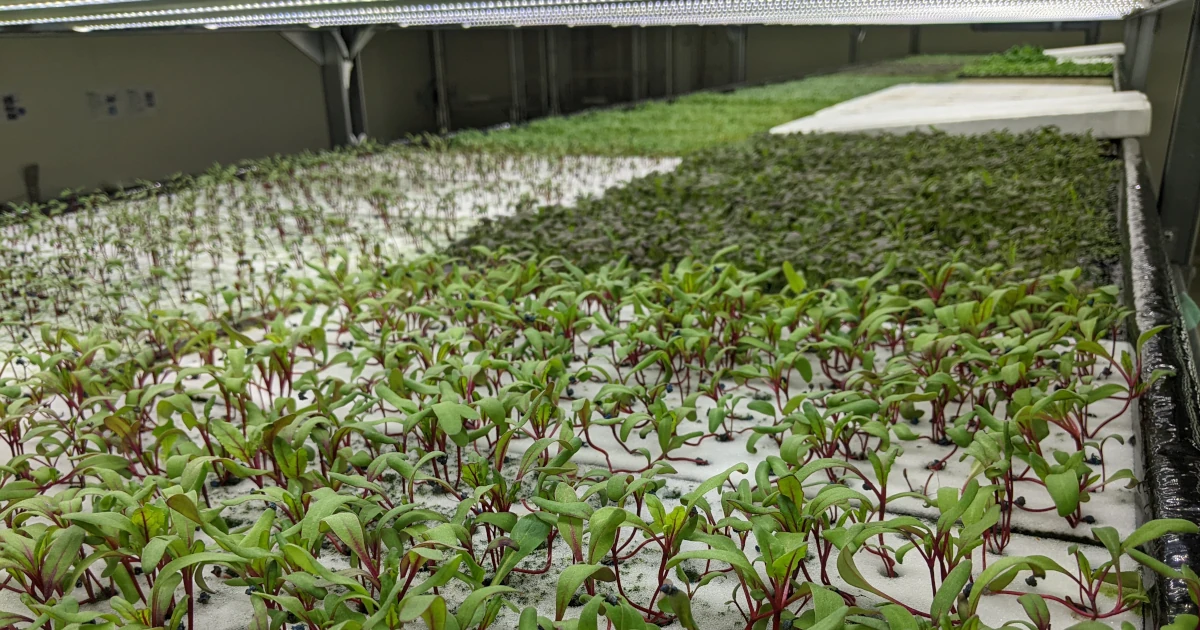
The challenges described above come from a fundamental mismatch between rice’s growing characteristics and the vertical farm model. At the research level, however, there are areas where hydroponic rice cultivation does show promise.
Rice with high concentrations of specific functional compounds that can be used as pharmaceutical raw materials could command a higher selling price. Controlling the growing environment to increase the concentration of specific compounds in crops is something vertical farms do well, and for that kind of application, growing rice in a vertical farm starts to make business sense. If consumer awareness around food safety and stable supply continues to grow, there is a possibility that demand for vertically farmed rice will eventually emerge.
At this point, commercial viability is still at an early stage. But if the application and market conditions change, the day may come when rice production in vertical farms becomes a realistic option.