Farm Operations Management
Causes and Countermeasures for Legginess: Mechanisms and How to Handle It in Vertical Farms
Articles for Farm Operations Managers
In a vertical farm, the more densely you line up your crops, the higher your area efficiency becomes. At the same time, once competition for light or poor air circulation sets in, “legginess”—where only the stems stretch—surfaces as a problem.
Legginess is not merely a cosmetic issue. It drags down yield, quality, workability, and disease risk in a cascading way, so you need to isolate the cause at an early stage.
In this article, I lay out everything from the plant physiology behind why legginess occurs to practical countermeasures through light, temperature, humidity, and density management.
What exactly is “legginess”?
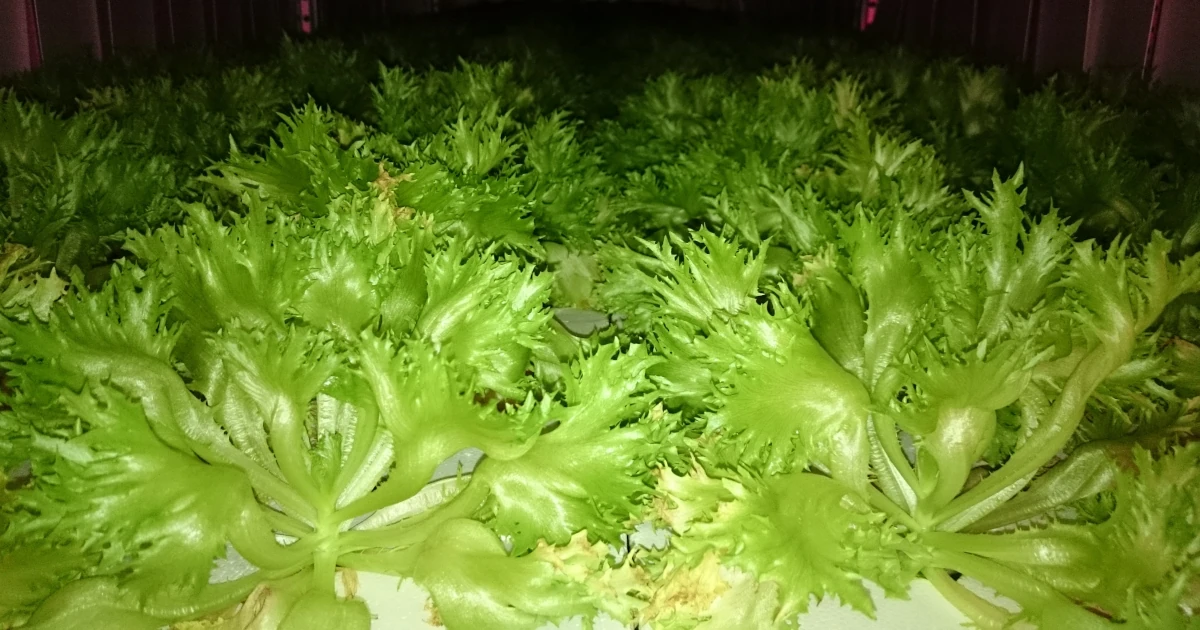
Legginess is a phenomenon in which stems stretch more than necessary due to stresses such as insufficient light or high temperatures. The stems become abnormally thin and long, the internodes (the spaces between leaves) widen, and the whole plant takes on a weak, spindly appearance.
Place a healthy plant next to a leggy one and the difference is obvious at a glance.
| Healthy plant | Leggy plant |
|---|---|
| Stems are thick and firm | Stems are thin and sometimes look translucent |
| Internodes (distance between leaves) are appropriately short | Internodes are abnormally long |
| Leaves are thick and deeply colored | Leaves are small and thin, with pale color |
| Overall compact and sturdy impression | Overall weak and prone to falling over |
Seedlings inside a plug tray stretching upward as if competing with each other, or plants by a window leaning toward one side in search of light—these are also forms of legginess.
To judge whether a plant is leggy, check the following.
- Stem thickness: Is the stem clearly thinner than a healthy plant of the same variety and age?
- Internode distance: Has the space between leaves become longer than usual?
- Posture: Can it stand on its own without support, and does it stay upright in a breeze?
- Leaf texture: Have the leaves become smaller and thinner than usual?
- Color: Is the overall color pale, with a yellow-green cast?
If several of these symptoms appear at the same time, you can judge that legginess is progressing.
Impact on yield and quality
For leafy greens, legginess can reduce the weight of the harvest by as much as 30%. Photosynthetic efficiency drops, and because energy is poured into stem elongation, the share sent to fruit and leaves shrinks.
On the quality side, production and accumulation of photosynthetic products become insufficient, lowering nutritional value and reducing sugar content and aromatic compounds. Because cell walls become thinner, post-harvest deterioration is also faster, and shelf life worsens.
There is an impact on labor costs as well. Weak stems are easily damaged by the slightest contact, and the work of managing lodging increases. If the cultivation period stretches out due to poor growth, that directly translates into higher resource input and a lower profit margin.
Furthermore, leggy plants become more vulnerable to disease. Cell walls are thinner, the physical barrier is reduced, and production of secondary metabolites (compounds plants make for self-defense) also decreases. Disturbances in water and nutrient balance further lower resistance to pests and diseases, and the plant falls into a vicious cycle.
The plant physiology mechanisms behind legginess
A collapse of plant hormone balance
The main actors in legginess are two plant hormones: gibberellin and auxin. Gibberellin primarily promotes stem elongation, while auxin is involved in cell elongation and division. Normally these work in an appropriate balance, but when light is insufficient, gibberellin activity rises and the plant sets off a “stretch in search of light” survival response.
On the other hand, the action of ethylene and abscisic acid, which suppress elongation, weakens under legginess conditions, so there is little restraint on stem elongation.
What happens at the cellular level
In a healthy plant, stem growth proceeds through a balance of cell division and cell elongation. Under legginess, cell elongation dominates over cell division: the number of cells stays low while each individual cell stretches abnormally long. Because these stretched cells can only form thin cell walls, a leggy stem ends up as a thin, weak structure overall.
Under a microscope, the cells of a healthy stem are short, numerous, and surrounded by thick cell walls, whereas the cells of a leggy stem are elongated with thin cell walls—the difference is visible at a glance.
The role of the photoreceptor phytochrome
Plants perceive red light and far-red light (the kind that dominates in shade) through photoreceptor proteins called phytochrome. In shade or under insufficient light, the balance of phytochrome shifts, sending the plant the signal, “there is not enough light, stretch further upward.” For phytochrome to function properly, sufficient light intensity and a well-balanced light quality (wavelength balance) are required.
What happens inside the plant during legginess
Under legginess, the balance between the energy gained through photosynthesis and the energy spent on respiration collapses. Thin, small leaves limit photosynthetic capacity, while rapid elongation increases energy consumption, leaving the whole plant in an energy deficit. Without enough energy, it cannot build sturdy stems and leaves, and this shows up as a “frail plant body.”
Abnormal distribution of photoassimilates
In a healthy plant, the sugars (photoassimilates) produced through photosynthesis are distributed in a balanced way among leaves, roots, stems, flowers, and fruits. Under legginess, the share going to stems increases, root development is sacrificed, and the capacity to take up water and nutrients drops. The share sent to fruits and flowers also decreases, suppressing the development of reproductive organs and leading to lower yield. This distribution imbalance is the root cause of the whole-body weakness of leggy plants.
Degraded cell wall quality
In a healthy plant, the cell walls contain sufficient sturdy cellulose and lignin (woody components). Under legginess, cellulose content decreases and lignification is also insufficient. With these effects combined, a leggy stem suffers a major drop in structural strength, unable to support even a slight breeze or its own weight, and it becomes prone to lodging.
Changes in day-night growth rhythm
Many plants show a rhythm in which photosynthesis takes center stage during the day, and at night they become active in elongation growth using the carbohydrates they stored. Under legginess this rhythm is disturbed, and nighttime elongation growth becomes excessive. Particularly under high night temperatures, the suppression of nighttime elongation becomes less effective and the plant keeps stretching through the night.
The causes of legginess
The causes of legginess are not single but a complex interaction of multiple environmental factors. Here I organize the main causes to watch for, especially in vertical farms and protected cultivation.
Insufficient light (problems of quantity and quality)
The most common cause of legginess is insufficient light. For plants, light is not only an energy source; it is also a source of information that determines the direction and form of growth.
The required light quantity (light intensity) varies greatly by crop. Leafy greens (such as lettuce) grow well at relatively low light intensities, while fruiting vegetables (such as tomatoes and strawberries) need far more light. As growth advances, leaf area increases and light has trouble reaching the lower leaves, so even when you think “it should be enough,” it can actually be insufficient.
The impact of light quality (wavelength balance)
The quality of light also has a major effect on legginess. Particularly important is far-red light (around 730 nm in wavelength). In nature, light that has passed through the leaves of other plants has a higher proportion of far-red light (because plant leaves absorb red light while letting far-red light pass through more easily). When this “ratio of red light to far-red light” (R/FR ratio) drops, the plant recognizes “there are competitors around me” and stretches its stems to capture light. This is the “shade avoidance response,” and it is one of the primary physiological mechanisms behind legginess.
In the artificial light environment of a vertical farm, far-red light can sometimes be too scarce. In environments with extremely little far-red light compared with natural light, normal morphogenesis can be hindered in some plants, so adjusting the light quality balance to suit the crop is important.
Mutual shading within the canopy
When plants are densely packed, they cast shadows on each other, and the light environment inside the canopy deteriorates dramatically. This is the phenomenon called mutual shading. Not only does the phytochrome balance shift in the lower and inner parts of the canopy, triggering legginess; plants also have the property of “sensing” the presence of their neighbors and stretching to compete for light. In nature this is a survival strategy, but in a cultivation environment it leads to lower yield and quality.
Problems of density and layout
Planting density is directly tied to yield, so there is a tendency to cram plants in—but this is a major cause of legginess. When plants are too close together, competition for light begins and the avoidance response described above is triggered.
Dense planting has the potential benefits of more plants per unit area and efficient use of floor space, while carrying the downsides of quality loss due to legginess, higher disease risk from poor ventilation, and lower yield per individual plant. Because the business model of a vertical farm depends on dense planting, density design that minimizes this trade-off is the core challenge.
Dense planting at the propagation stage also has a large effect on later growth. Seedlings that have undergone final planting in a leggy state struggle to fully recover even if the environment later improves. The cell count of a plug tray (for example, 72-cell, 128-cell, 200-cell) should be chosen not only from the viewpoint of “how many plants can we produce?” but also from “what quality of seedling do we want to raise?”—and for crops with a long propagation period, choosing a tray with fewer cells (larger individual cells) can reduce the risk of legginess.
Environmental control practices to prevent legginess
Optimizing the light environment
Optimizing the light environment is the most basic and effective countermeasure for preventing legginess. You need to think about it from both sides: light quantity (intensity) and light quality (wavelength balance).
Making use of reflective materials
The light a plant receives is not only what arrives directly from the source; reflected light also plays an important role. By raising the reflectivity inside the facility, you can increase the amount of light reaching the plants by 20 to 30% with the same lighting equipment.
In raised-bed cultivation, installing reflective sheets on the sides of the grow bed supplies light from the sides as well, improving the light environment in the middle and lower canopy. Painting the interior walls of a greenhouse with white paint or covering them with highly reflective film also raises the light-use efficiency of the whole facility.
Eliminating light unevenness
Uniformity of light is also indispensable for preventing legginess. When using LED lighting, set an appropriate distance between fixtures so that their coverage areas overlap. As a general guideline, a spacing of about half the lighting height is a good target. Also, by arranging things so that light arrives not only from directly above but also from angles and from the side, light reaches the middle and lower canopy, which helps prevent legginess throughout the whole plant.
Planting density and layout
Designing an appropriate planting density is an important element for achieving both legginess prevention and yield. Since plants grow larger over time, you need to think of initial density and final density as separate things.
Once the proportion of light passing through the plant body (light transmittance) drops to 20% or below, the risk of legginess rises. Regularly check the light environment inside the canopy, and consider thinning or harvesting before transmittance falls below 20%. If you use leaf area index (LAI) as an indicator, light-use efficiency peaks around LAI 3 to 4 for many crops; beyond that, light transmission to the lower canopy worsens and the risk of legginess rises.
A good guideline for timing thinning or transplanting is the point when leaf overlap with adjacent plants exceeds 20%, or when lower leaves begin to yellow. Yellowing of the lower leaves is a sign of insufficient light, and it requires immediate action.
Choosing countermeasures with the highest return on investment
Since it is hard to introduce every countermeasure at once, it is realistic to implement them in order of investment efficiency.
- Installing reflective materials: Low cost, yet able to improve the light environment by 15 to 30%
- Enforcing proper density: No extra cost, improving both quality and yield
- Adjusting lighting height: Optimizing the light environment by making use of existing equipment
- Introducing intermittent lighting: Holding down electricity consumption while improving light quality
- Reinforcing supplemental lighting: High cost, but reliably effective
It is sensible to start with the low-cost countermeasures 1 through 3, evaluate their effects, and then consider 4 onward as needed. By shifting from the mindset of “more light equals higher electricity bills” to the perspective of “light quality and efficient use of light,” you create room to reconcile energy savings with legginess prevention.
Early detection of legginess and how to respond
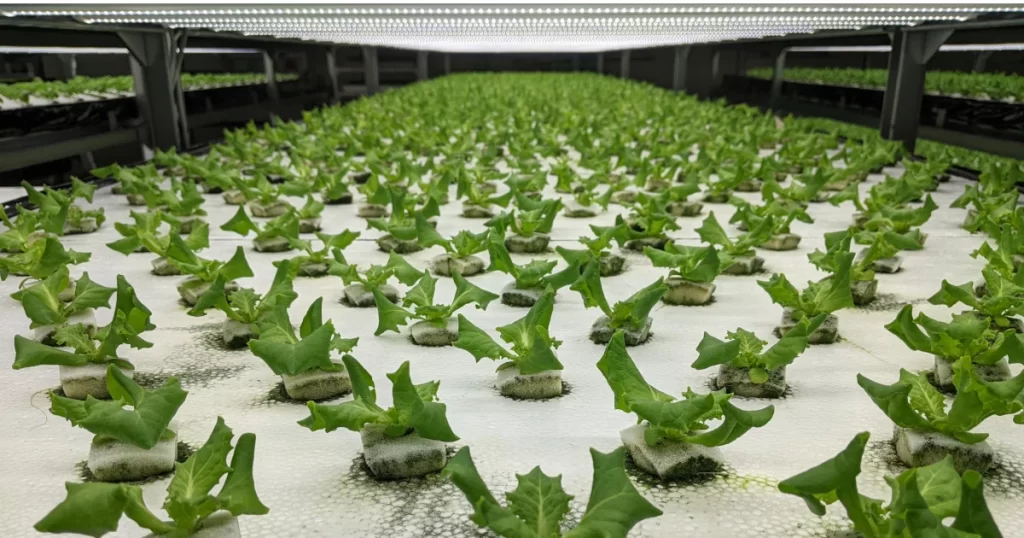
Even when you work on prevention, signs of legginess sometimes appear. What matters is early detection and swift action.
Checking for early symptoms
Legginess does not appear all at once. By keeping the following points in mind during daily management, you can catch it before it becomes full-blown.
- Internode elongation: Have internodes become more than 10% longer than usual?
- Stem color and thickness: Compared with a healthy stem, has the color grown pale and the stem thinner?
- Leaf orientation: Is there a tendency for leaves to stretch upward (a posture seeking light)?
- Leaf size and thickness: Are newly expanding leaves becoming small and thin?
- Inside the canopy: Are the lower leaves starting to yellow?
If several signs appear at the same time, immediate action is required.
By regularly taking fixed-point photographs from the same angle and distance and comparing them over time, you can visualize even subtle changes. Cross-checking environmental data (light, temperature, humidity) against signs of legginess helps you uncover correlations useful for pinpointing the cause and preventing recurrence. Start with a simple record using your smartphone camera and notes app, and build a system you can keep up without strain.
What to do once it has occurred
For mild legginess, you may be able to recover the plants by reinforcing the light environment with supplemental lighting or reflective materials and by widening plant spacing. Recovery measures work best when combined, but abrupt environmental changes can themselves become an added stress, so carry them out in stages.
When legginess has progressed to a severe state, you need to judge calmly whether to try to recover the plants or to discard them and switch to new seedlings. If stems are extremely thin and soft, recovery is difficult; but if the root system is healthy and the growing point is alive, there is still room for recovery. In early cultivation, replanting is efficient; close to harvest, you can also consider managing the leggy plants as they are and harvesting them. Either way, since leaving the environment unchanged will cause a recurrence, addressing the root cause comes first.
Hold to the simple criterion of “if mild, keep up the countermeasures; if severe, discard and switch,” and in practice it is effective to prioritize “stopping the deterioration first” before putting recovery measures in place.
Conclusion
Legginess is a plant physiological response triggered by insufficient light and dense planting, and it brings cascading negative effects on yield, quality, and disease resistance. However, once you understand its mechanism, you can start producing results from low-cost countermeasures such as installing reflective materials and managing density.
What matters in controlling legginess on the shop floor is building up daily observation as records and cross-checking them against environmental data. If you can identify the cause the moment you notice something off, you can stop the problem with minor adjustments. Conversely, the longer you look the other way, the higher the cost of dealing with it climbs.
Countermeasures against legginess are not a single technique; they function only when multiple elements—light, density, propagation, and observation records—work together. Improving just one of them is not enough; capturing the whole as a design is what leads to stable profitability.